
ALL-IN-ONE PLATFORM
esDynamic
Manage your attack workflows in a powerful and collaborative platform.
Expertise Modules
Executable catalog of attacks and techniques.
Infrastructure
Integrate your lab equipment and remotely manage your bench.
Lab equipments
Upgrade your lab with the latest hardware technologies.



PHYSICAL ATTACKS
Side Channel Attacks
Evaluate cryptography algorithms from data acquitition to result visualisation.
Fault Injection Attacks
Laser, Electromagnetic or Glitch to exploit a physical disruption.
Photoemission Analysis
Detect photon emissions from your IC to observe its behavior during operation.



EXPERTISE SERVICES
Evaluation Lab
Our team is ready to provide expert analysis of your hardware.
Starter Kits
Build know-how via built-in use cases developed on modern chips.
Cybersecurity Training
Grow expertise with hands-on training modules guided by a coach.




ALL-IN-ONE PLATFORM
esReverse
Static, dynamic and stress testing in a powerful and collaborative platform.
Extension: Intel x86, x64
Dynamic analyses for x86/x64 binaries with dedicated emulation frameworks.
Extension: ARM 32, 64
Dynamic analyses for ARM binaries with dedicated emulation frameworks.
DIFFERENT USAGES
Penetration Testing
Identify and exploit system vulnerabilities in a single platform.
Vulnerability Research
Uncover and address security gaps faster and more efficiently.
Code Audit & Verification
Effectively detect and neutralise harmful software.
Digital Forensics
Collaboratively analyse data to ensure thorough investigation.




EXPERTISE SERVICES
Software Assessment
Our team is ready to provide expert analysis of your binary code.
Cybersecurity training
Grow expertise with hands-on training modules guided by a coach.

INDUSTRIES
Semiconductor
Automotive
Security Lab
Gov. Agencies
Academics
Defense
Healthcare
Energy

ABOUT US
Why eShard?
Our team
Careers



FOLLOW US
Linkedin
Twitter
Youtube
Gitlab
Github





Everything you need for a successful Laser Fault Injection campaign


Laser fault injection is a powerful method for creating localized disruptions on a silicon die, generating logical faults that can compromise a system's security by targeting the confidentiality and integrity of data or operations. This laser-induced fault injection technique is crucial for many organizations to assess and validate the security of their hardware or software protections, as well as third-party technologies.
Since the 2003 "optical fault induction" publication, these laser fault injection attacks have proven effective across various devices, including secure controllers, SoCs, FPGAs, or any other controllers. These hardware exploitation techniques exploit vulnerabilities at the physical level, making laser fault injection testing an essential component of hardware security solutions.
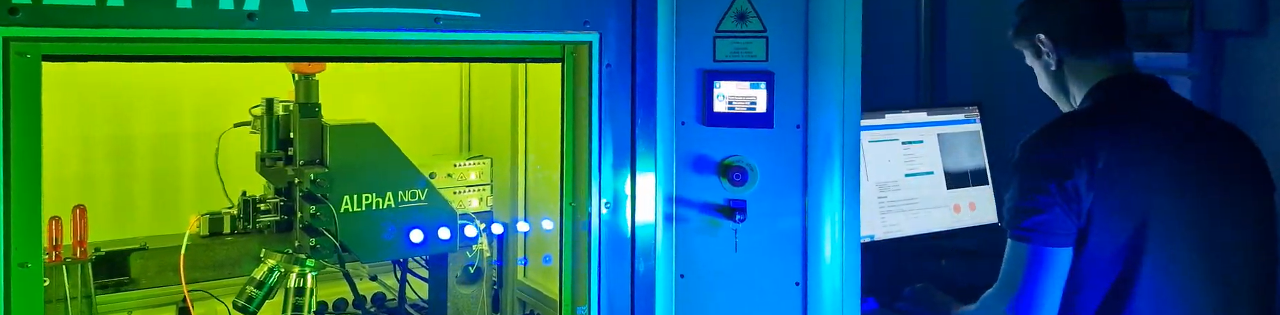
The challenge lies in effectively integrating hardware, instrumentation, and expertise. Synchronizing devices and managing complex setups can lead to inefficiencies and delays, hindering research progress.
To overcome this, eShard built a laser fault injection solution on ALPhANOV's optical and laser technologies, powered by the esDynamic data sciences platform. This approach ensures seamless synchronization and enhanced efficiency, allowing for precise fault injections while minimizing disruptions to the workflow.
Advanced Optical Integration for Precision Fault Injection
Conducting a laser fault injection campaign presents significant challenges due to the complexity of the required equipment and the high level of expertise needed to operate it effectively. Without the right setup and knowledge, organizations may struggle to achieve reliable and reproducible results in their hardware security testing.
Here's what a typical laser fault injection bench includes:
1️⃣ High-Quality Laser Sources
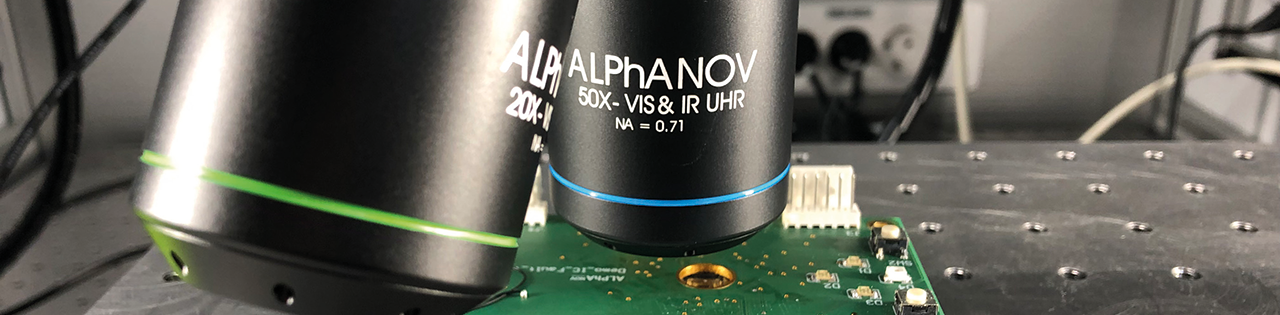
Laser sources, mostly in the near-infrared spectrum, are essential for creating localized disruptions on a die. Monomode laser diodes are recommended to manage a local impact with the highest density. The smallest impacts reach micrometer scales nowadays, and even less with biphoton technologies.
ALPhANOV provides monomode laser diode technology in the near-infrared range. Used by many stakeholders in the field, this technology is considered the best option for fault injection, offering unparalleled precision and control.
2️⃣ Advanced Optical Equipment
Optical equipment is critical to focus and control the laser beam with minimal loss. A dedicated system managing the laser spot size brings even more control.
ALPhANOV has designed an optical system to create a laser beam with optimal characteristics. With their Optispot device, the laser focus can be controlled to target different layers in the silicon and maximize local effects—an essential factor for successful fault injection using lasers.
3️⃣ Precision Motorized Stages
Motorized stages with accuracy consistent with the laser beam help find the sweet spots on the die and gain control of the expected logical fault.
ALPhANOV integrates motorized stages with precision matching the laser beam, enhancing your ability to perform precise hardware vulnerability assessments and integrated circuit testing.
4️⃣ Infrared Imaging Systems
Infrared cameras provide imaging through the silicon bulk, helping to understand the die structure and target specific parts of the die.
ALPhANOV’s offerings include affordable infrared cameras. The die is illuminated with a specific infrared source to build high-resolution imaging. Unlike many existing systems, ALPhANOV’s solution is designed to manage infrared observation during the laser pulse without damaging the camera. This provides visual control of the beam, aiding in laser fault injection detection and improving the efficiency of your fault injection methodologies.
5️⃣ Die Flatness Maintenance and Precise Positioning
Maintaining the flatness of the die and precisely positioning the laser spot are critical for better efficiency, particularly for large dies. ALPhANOV’s tip-tilt solutions, available in manual or motorized versions, are particularly adapted for large silicon surfaces. They keep a consistent laser effect over the surface, compensating for flatness discrepancies commonly found in large chips.
By integrating these essential components from ALPhANOV with eShard's esDynamic software platform, our turnkey solution equips your team with everything needed for a successful fault injection campaign.
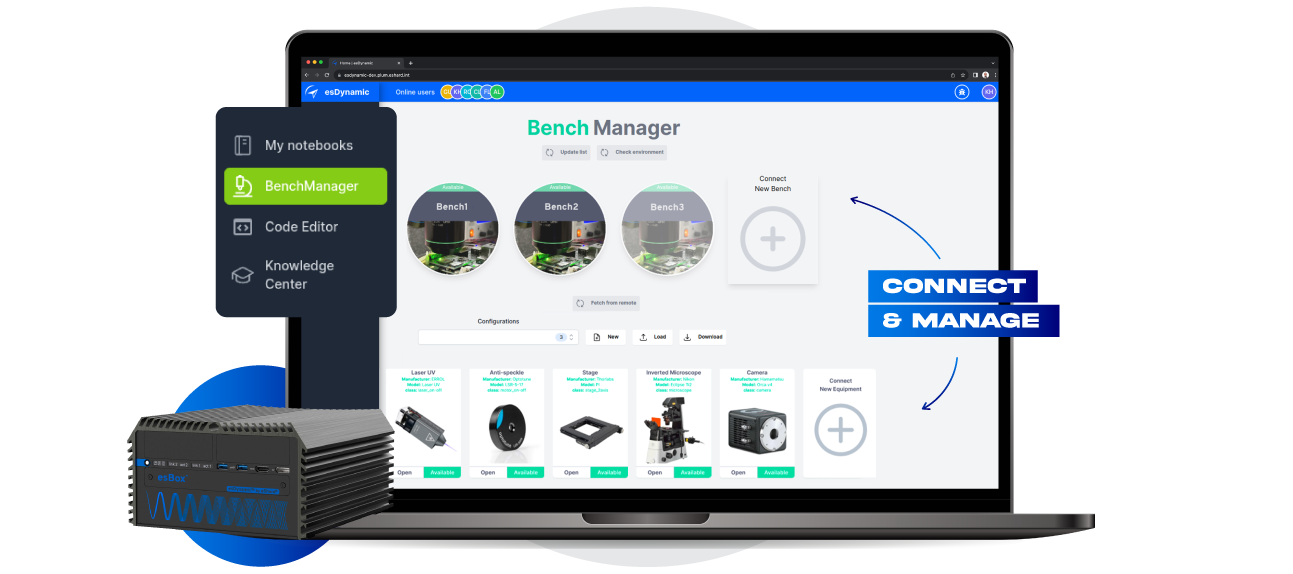
Ready from Day One
Before the hardware is even shipped, esDynamic is pre-installed and configured. This means you can immediately begin your laser fault injection testing without the need for additional development. The time saved allows you to focus directly on testing and analysis, rather than worrying about system compatibility or setup delays. This accelerates your fault injection research and hardware security evaluations.
ALPhANOV’s equipment is seamlessly integrated into the esDynamic platform, with all commands accessible via a Python API. For added convenience, dedicated widgets were developed to streamline the laser setup process, enhancing your hardware security testing workflow.
Manage Your Hardware Configuration
Laser fault injection involves more than just laser and optical technology—it also requires efficient operation of the Device Under Test (DUT). Practical attacks may require tens of thousands of pulses to identify the correct parameters, crucial for cryptographic fault analysis and fault analysis in cryptography. Additionally, incorporating other equipment like side-channel setups for timing and pattern detectors for precise triggers is essential.
The esDynamic platform offers the flexibility to integrate and control all devices, and with its unique bench manager features, users can create and consolidate hardware configurations for easy experimental replay. This is vital for security auditing for embedded devices and managing hardware encryption vulnerabilities.
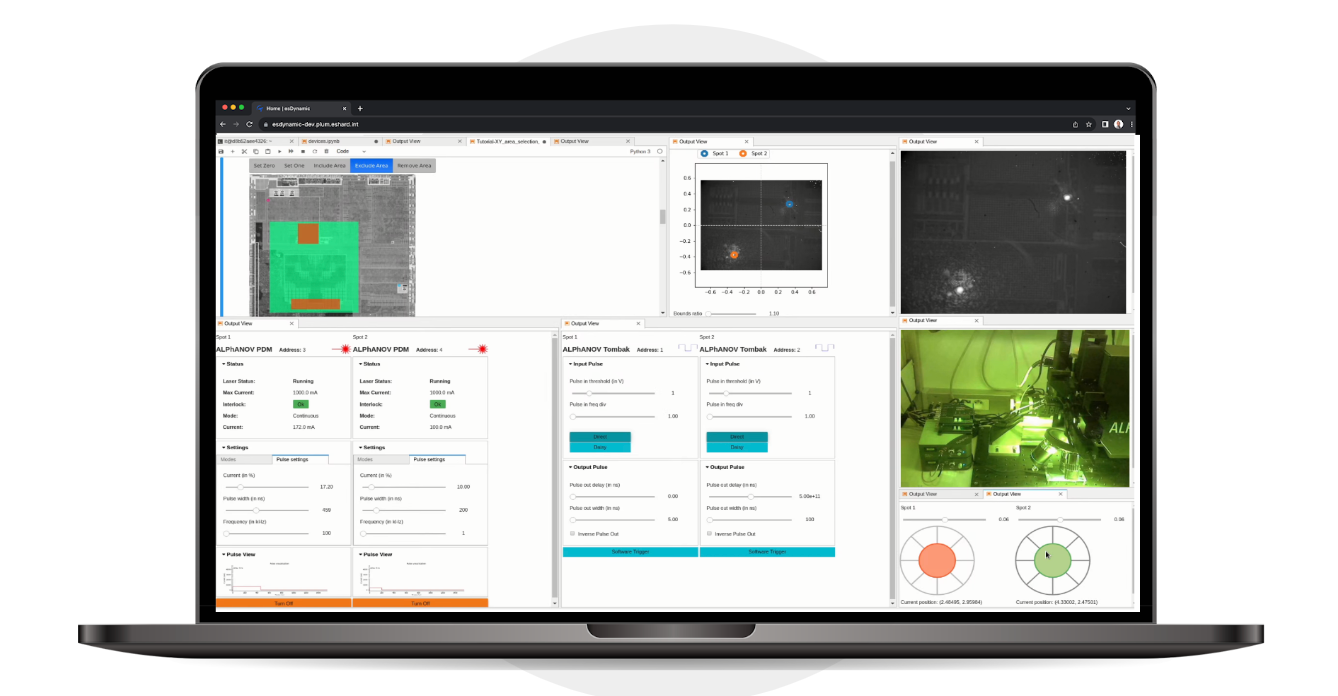
One Environment for the Whole Workflow
Intelligence is crucial for handling time-consuming and complex tasks like multi-dimensional scanning, which includes variables such as laser power, beam size, timing, and die location. The goal is to manage extended experiments efficiently and pinpoint the few combinations that produce logical faults. This is key in fault tolerance in hardware and developing effective laser fault injection countermeasures.
Once these "sweet spots" are identified, analysts can build a targeted fault injection strategy. The esDynamic platform simplifies this process, offering flexible management of multi-dimensional scans, chip reactions, and cartography creation, making it adaptable for efficient laser fault injection experimentation.
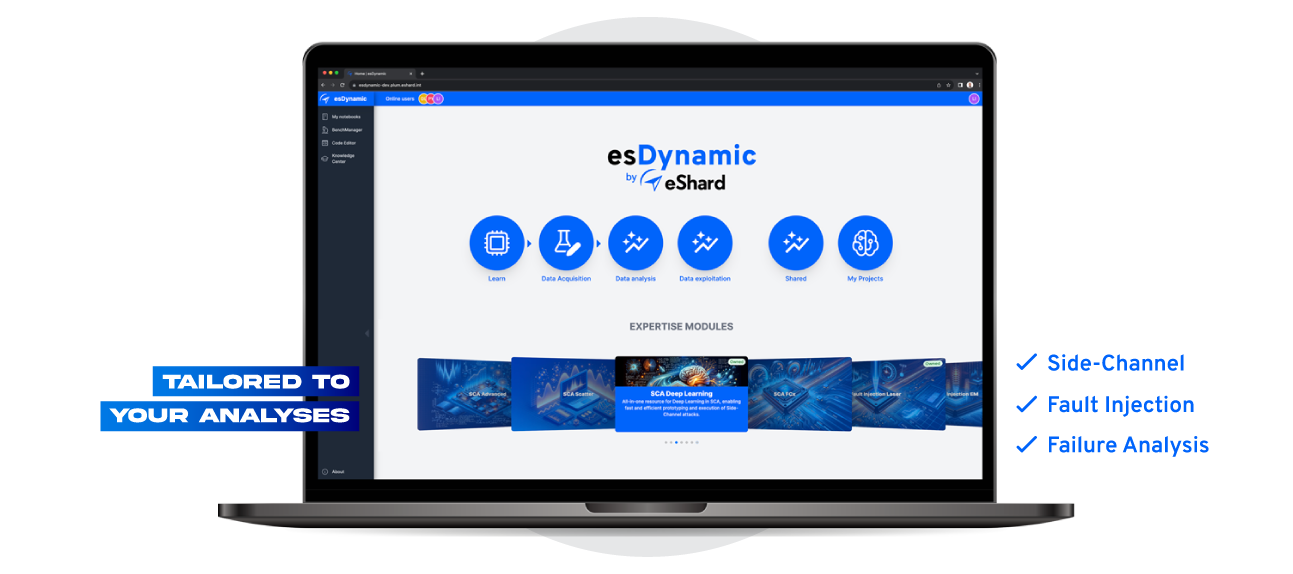
Flexible and Customizable
As your research progresses, esDynamic adapts to meet your evolving needs, making it an ideal long-term solution for hardware security analysts who require a system that keeps pace with the rapidly changing demands of cybersecurity in hardware testing.
Additionally, esDynamic supports expanding attack vectors, such as electromagnetic fault injection (EMFI) and voltage fault injection (Voltage FI), ensuring that your testing platform can be built in a consistent way. This flexibility is essential for exploring various hardware attack methods and developing protective measures against laser attacks.
A Collaborative and Efficient Workspace
Laser fault injection is a sophisticated technique that may require combining different expertise. eShard provides a collaborative workspace where teams can share data and insights efficiently. esDynamic supports the entire testing workflow, from data acquisition to visualization. With JupyterLab notebooks, your team can standardize methodologies, collaborate in real-time, and accelerate the analysis process, crucial for hardware vulnerability assessments and secure chip design.
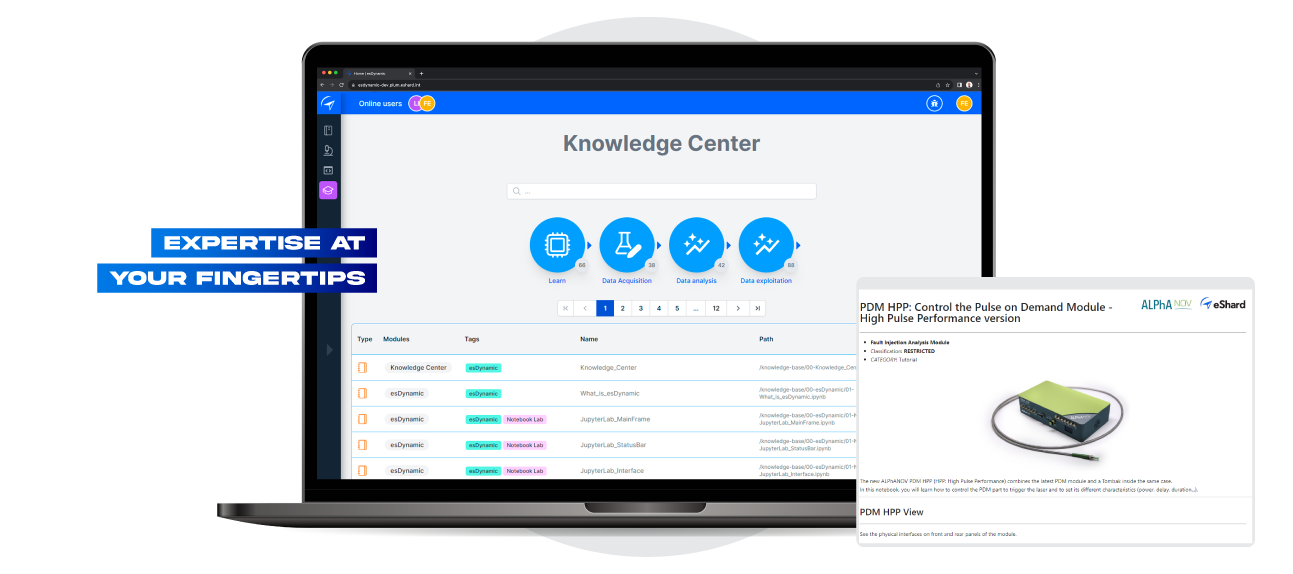
Expertise at Your Fingertips
At the core of eShard’s offering is its expertise, honed over 10 years in hardware security. This expertise is built into the esDynamic platform, providing you with tools that simplify complex tasks, making it easier to conduct thorough and efficient security evaluations, build and transfer knowledge in a critical expertise.
To support your team’s learning curve, we provide starter kits, a built-in use case helping your team to quickly gain the practical expertise and to benchmark their ability to implement fault injection methods .
Beyond the platform, we also offer investigation services with a lab equipment shared with ALPhANOV in their premises where our experts can assist in designing, setting up, and conducting complex analyses. Whether you need support with fault injection or advanced photonic emission studies, our team is ready to provide tailored guidance and solutions.
Explore how esDynamic can transform your research.